

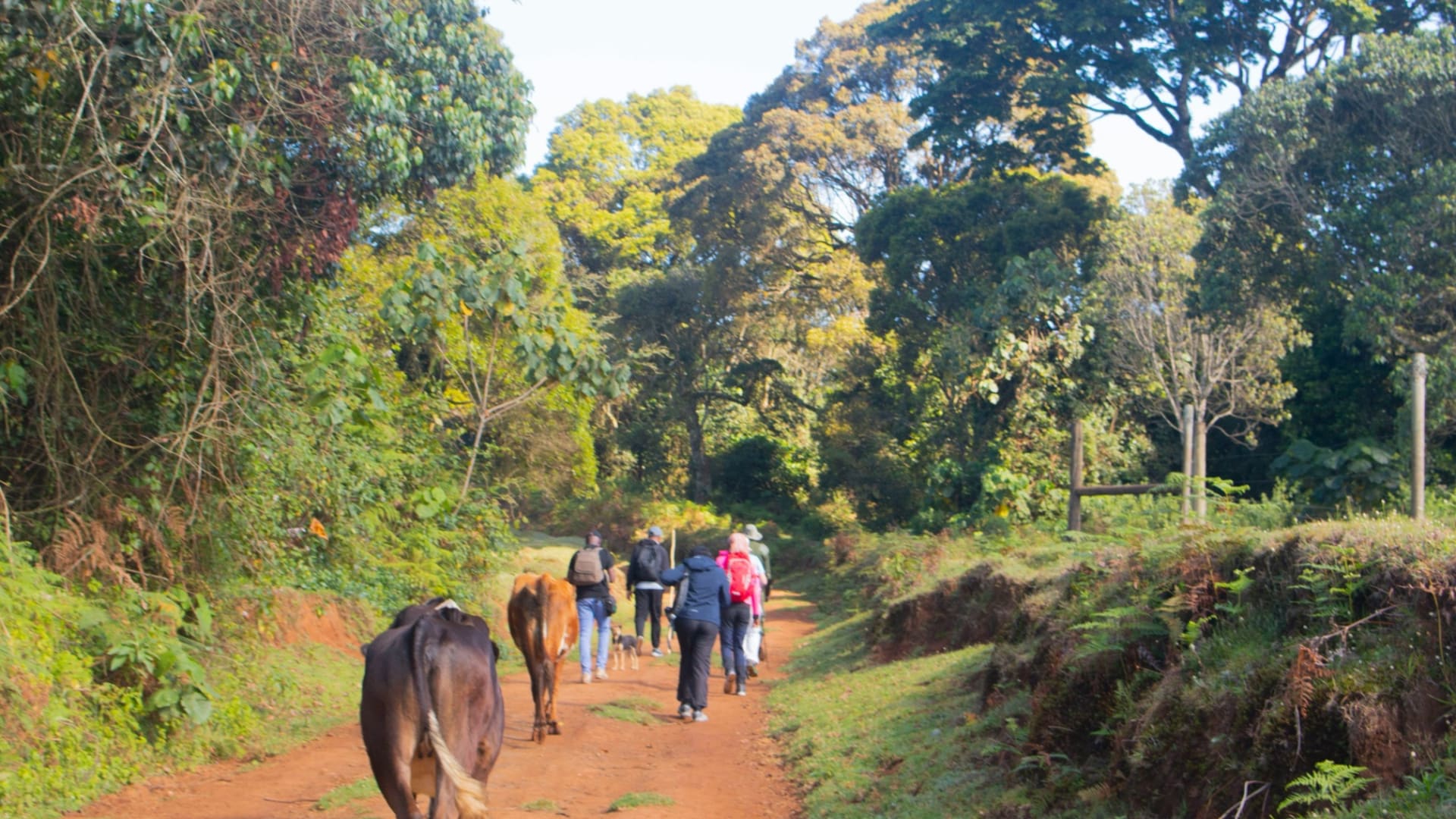
Aberdare National Park
Discover Forests, Waterfalls and Wildlife in the Aberdares
Overview
Aberdare National Park
Aberdare National Park offers a very different safari experience from Kenya's open savannah reserves.
Located in the central highlands, the park rises through dense mountain forests, bamboo zones, moorlands and rugged valleys.
Cool temperatures, frequent mist and dramatic changes in elevation give the Aberdares an atmosphere that feels almost entirely separate from the classic grassland safari.
TipAberdare is particularly suitable for travelers who want to combine wildlife with mountain scenery, forest exploration and a cooler highland environment.
Why Visit Aberdare National Park?
The Aberdares are known for their dramatic landscapes and unusual combination of habitats.
The park protects a high-altitude ecosystem that supports wildlife adapted to forest and mountain conditions.
Visitors may encounter:
- Elephants
- Buffaloes
- Black rhinoceros
- Leopards
- Bongo antelopes
- Bushbucks
- Waterbucks
- Warthogs
- Hyenas
- Giant forest hogs
- Colobus monkeys
- Sykes' monkeys
- Numerous bird species
Mountain landscapes, forest wildlife, birdwatching, photography, couples and travelers seeking an alternative to traditional savannah safaris.
The Aberdare Landscape
The park's scenery changes dramatically with altitude.
Lower areas contain dense forest, while higher elevations transition into bamboo and open moorland.
The landscape includes:
- Mountain forests
- Bamboo forests
- Alpine moorlands
- Deep valleys
- Waterfalls
- Rocky ridges
- Streams
- High-altitude wetlands
The combination of vegetation and elevation creates an environment that is visually and ecologically distinct from most Kenyan safari destinations.
Mist-covered Aberdare mountain forest with an African elephant emerging from dense vegetation, surrounded by lush greenery and dramatic highland terrain.
Wildlife in Aberdare
Wildlife viewing in Aberdare is different from watching animals across open plains.
Dense vegetation can make sightings more challenging, but this also makes encounters feel more intimate and unpredictable.
Elephants and buffaloes are among the larger animals visitors may encounter, while black rhinos and leopards can be more elusive.
The park is also an important habitat for the endangered mountain bongo.
NoteForest wildlife can be harder to spot than animals in open savannah. A patient guide and careful observation are especially valuable in Aberdare.
The Mountain Bongo
The mountain bongo is one of the most distinctive species associated with the Aberdare ecosystem.
This large forest antelope has a striking reddish-brown coat with white markings and vertical stripes.
Because of its rarity and elusive behavior, seeing one in the wild can be particularly special.
The possibility of encountering the rare mountain bongo adds a conservation-focused dimension to an Aberdare safari.
Waterfalls and Highland Scenery
Aberdare is known for its spectacular waterfalls and steep valleys.
Water flows through the mountain environment throughout the year, creating streams, cascades and forested valleys.
Popular scenic areas include:
- Karuru Falls
- Gura Falls
- Chania Falls
- Moorland viewpoints
- Mountain ridges
TipTravelers interested in scenery should allow time for viewpoints and waterfall areas rather than treating Aberdare purely as a game-drive destination.
Things to Do in Aberdare
Game Drives
Game drives provide opportunities to explore the park's forests, valleys and open highland areas.
Waterfall Visits
Scenic stops at waterfalls can add a strong landscape component to your itinerary.
Birdwatching
Aberdare's forests and high-altitude habitats support a wide range of bird species.
Nature Walks
Where permitted, guided walks can provide a closer look at plants, smaller wildlife and the mountain ecosystem.
Forest Photography
The mist, dense vegetation, waterfalls and changing light create atmospheric photographic conditions.
WarningWeather conditions can change quickly at high elevations. Follow guide instructions and use appropriate clothing and footwear for outdoor activities.
Birdwatching in Aberdare
The park's forest and highland habitats support a diverse bird population.
Birdwatchers can look for:
- Sunbirds
- Turacos
- Eagles
- Mountain buzzards
- Hartlaub's turacos
- Forest-dwelling species
- Highland specialists
The dense vegetation means binoculars can be particularly useful.
Early morning is a good time to explore forest habitats when bird activity is often high.
Aberdare and the Story of Treetops
The Aberdare region has an important place in Kenya's modern tourism history.
Treetops Lodge became internationally famous after Princess Elizabeth stayed there in 1952 and learned of her accession to the British throne while in Kenya.
The story has contributed to the region's historical significance and its long association with classic Kenyan safari tourism.
NoteHistorical attractions and accommodation access can change, so confirm current visiting arrangements when planning your itinerary.
Best Time to Visit Aberdare
Aberdare can be visited throughout the year, but conditions vary considerably with altitude and rainfall.
| Travel Period | Typical Experience |
|---|---|
| Drier periods | Generally easier road conditions and clearer viewpoints |
| Wet periods | Lush vegetation, waterfalls and misty forest scenery |
| Cooler highland periods | Crisp temperatures and atmospheric landscapes |
TipPack layers and waterproof clothing even when visiting during a generally dry period. Highland weather can change quickly.
How Long Should You Stay?
A 1 to 2-night stay can provide a useful introduction to Aberdare.
A 2-night stay is preferable if you want enough time for wildlife viewing, scenic exploration and relaxation in the highland environment.
1 to 2 nights for most itineraries.
Where Is Aberdare National Park?
Aberdare National Park is located in central Kenya within the Aberdare mountain range.
Its position makes it convenient to combine with several central Kenya destinations.
Popular combinations include:
- Nairobi + Aberdare
- Aberdare + Ol Pejeta
- Aberdare + Mount Kenya
- Aberdare + Lake Nakuru
- Aberdare + Maasai Mara
Getting to Aberdare
By Road
The park can be reached from Nairobi and other central Kenya destinations by road.
It fits naturally into itineraries involving Mount Kenya, Ol Pejeta and the Great Rift Valley.
By Air
Regional air travel can be combined with road transfers through nearby towns and safari areas.
NoteRoad access is often the most practical option when Aberdare forms part of a multi-destination central Kenya itinerary.
Aberdare for Families
Aberdare can be suitable for families, particularly those interested in nature and scenic experiences as well as wildlife.
Families should consider:
- Child age policies
- Family rooms
- Vehicle arrangements
- Game-drive duration
- Walking activities
- Highland temperatures
- Rainfall and weather
- Accommodation facilities
WarningChildren should remain supervised during outdoor activities and follow all instructions from guides and accommodation staff.
Aberdare for Couples
The cool mountain environment can provide a romantic contrast to the warmer lowland safari destinations.
Couples can enjoy:
- Forest accommodation
- Scenic viewpoints
- Waterfall visits
- Private game drives
- Birdwatching
- Mountain walks
- Quiet evenings in the highlands
The misty forests and secluded mountain atmosphere can make Aberdare an appealing stop for couples who want something different from a traditional savannah safari.
Wildlife Photography
Aberdare offers a different photographic environment from open plains.
Potential subjects include:
- Elephants
- Buffaloes
- Black rhinos
- Leopards
- Bongo antelopes
- Monkeys
- Forest birds
- Waterfalls
- Mountain forests
- Moorland landscapes
Use the surrounding vegetation, mist and forest layers to create atmospheric wildlife images rather than relying exclusively on close-up portraits.
Safari Safety in Aberdare
Aberdare remains a wild mountain environment despite its established tourism infrastructure.
During your visit:
- Stay with your guide.
- Remain inside the vehicle unless instructed otherwise.
- Never approach wildlife.
- Follow park regulations.
- Take weather conditions seriously.
- Use designated walking routes.
- Keep appropriate distance from animals.
DangerDense forest can reduce visibility and make wildlife difficult to detect. Never leave designated areas or approach animals without authorization.
Accommodation in Aberdare
Accommodation includes mountain lodges, forest properties, camps and safari hotels in the surrounding region.
When choosing where to stay, consider:
- Location
- Wildlife viewing opportunities
- Forest or mountain views
- Waterhole viewing
- Family suitability
- Walking activities
- Meal arrangements
- Heating and weather protection
A property overlooking a waterhole can provide wildlife viewing opportunities without requiring every observation to take place during a game drive.
Aberdare Safari Planning
Aberdare works especially well as part of a central Kenya itinerary.
| Combination | Ideal For |
|---|---|
| Nairobi + Aberdare | Short highland escape |
| Aberdare + Ol Pejeta | Wildlife and conservation |
| Aberdare + Mount Kenya | Mountain-focused itinerary |
| Aberdare + Lake Nakuru | Highland and Rift Valley safari |
| Aberdare + Maasai Mara | Diverse Kenya safari |
TipCombining Aberdare with Ol Pejeta provides a strong contrast between mountain forests and open wildlife landscapes.
Experience Aberdare With ZikaraLink Travel
ZikaraLink Travel can arrange Aberdare safaris around your preferred travel dates, budget, accommodation style and interests.
Safari planning can include:
- Aberdare game drives
- Forest wildlife experiences
- Waterfall visits
- Birdwatching
- Photography safaris
- Family safaris
- Couples' escapes
- Aberdare and Ol Pejeta itineraries
- Aberdare and Mount Kenya combinations
- Central Kenya safari circuits
- Safari and beach holidays
- Customized Kenya safaris
NoteAberdare National Park offers a cooler, greener and more atmospheric side of Kenya, where forests, waterfalls, mountain wildlife and mist-covered landscapes replace the open horizons of the classic savannah safari.
Best Time to Visit
Best time data not yet available for this destination.
Getting There
By Road
5-6 hours from Nairobi via Narok (270km)
By Air
45-minute flight from Wilson Airport to various airstrips